Amosando publicacións coa etiqueta Technology. Amosar todas as publicacións

2 de novembro de 2016

Rosetta's mission came to an end

Rosetta - a mission from the ESA - followed a comet called 67P through Space for a long time. Rosetta got a lot of information, such as temperature measurements, photos, dust grains, measurements of the gravity and the magnetic field of the comet and so on. However, the most remarkable discovery is that she found ingredients that were crucial for the origin of life on Earth.
Rosetta's mission is considered a huge success because it was the first attempt in history to send a lander to a comet. 


 Image from ESA


From Los Angeles Times
Written by Marcela Couto and Noa Fernández, 3rd A  (  9th grade )

24 de xaneiro de 2016

Hoverboards come under fire


Last Christmas hoverboards were one of the most popular presents, but they came with a surprise, they get burnt. They can burn either when they are plugged in and charging or when someone is riding them, so they are very dangerous. Experts think their batteries are low- quality, they may have deffects, such as holes in their separator or impurities inside the battery. When big retailers, Amazon for example, have known about this problem, they decided to stop selling them for a time to prevent accidents.


From: // scienceworld.scholastic.com
Written by Alba Janeiro, 3rd A (9th grade)

5 de abril de 2015

Proton beams are back in the LHC

After two years of intense maintenance and consolidation, and several months of preparation for restart, the Large Hadron Collider (LHC), the most powerful particle accelerator in the world, is back in operation. Today at 10.41am, a proton beam was back in the 27-kilometer ring ...
read more -->


4 de febreiro de 2015

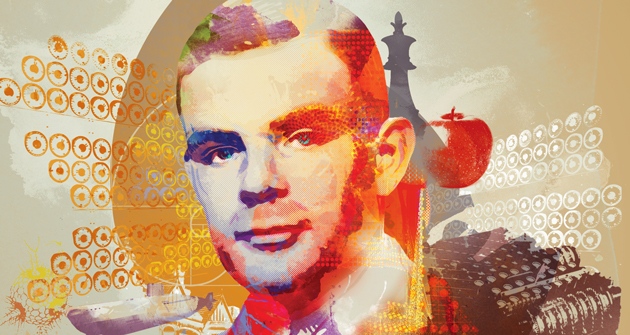
Code breaking: Alan Turing

Alan Turing was an excellent mathematician and logician. He was born in June 23, 1912 in London.
During World War II he joined the Government Codes and Cypher School at Bletchley Park, where he created a machine that broke the enemy codes and shortened the war by two years. Later on, after the war he was given the OBE, an award for his services to the country.
In 1950, Turing wrote a book about the notion of an universal machine which is now the central concept of the modern computer. Two years after, in 1952, he was persecuted for homosexual acts, since at that time such behaviour was illegal.
Unfortunately, on 8 June 1954 Turing's housekeeper found him dead from cyanide poisoning.
 
Image from www.nature.com


Written by Marisol Fernández, Noa García and Sofía López -   3rd A (9th grade).

23 de xaneiro de 2015

A plastic that recycles itself

Recycling electronic gadgdets is really difficult because it is not easy to separate their plastic components and dangerous to burn them.
Now researchers have invented new plastics which can be degraded exposing them to ultraviolet light. These new plastics dissolve into a clear solution after this exposition. Their small components can be used again to make other plastics, therefore we generate less waste and we reduce raw materials.
Researchers have to check if the use of light influences the properties of plastics, for instance, their strength or durability.

Written by Daniel Vázquez and Santiago Rojas - 3rd ESO (9th grade).

21 de xaneiro de 2015

UNESCO declares 2015 International Year of Light

UNESCO's International Years have been celebrated since 1959 and some are based on science topics, such as Physics, Astronomy or Chemistry.
This year UNESCO is celebrating the International Year of Light because in 2015 there are some anniversaries related to light: the notion of the wave nature of light is 200 years old, the development of electromagnetism is 150 years old and The General Relativity Theory, which includes the speed of light as an essential part, is 100 years old.
 
Image from http://www.eps.org/
 
The most significant aspect of this International Year is the fact that light connects many different fields such as Astronomy, Medicine, Arts and Technology.
There will be different events around the world in order to communicate the importance of light in our daily life.

From http://physicsworld.com

Written by Laura Blanco and Tania Conde - 3rd ESO (9th grade).


6 de novembro de 2014

Production of hydrogen fuel using sunlight

Michael Grätzel, a Swiss chemist, and his group developed a photovoltaic device using perovskites which are cheap and abundant materials. This device is used to break water into hydrogen and oxygen using sunlight. 
Grätzel's gadget improves the efficiency and price of previous aproaches using silicon. But more work is needed on the durability and stability of the solar cells.


Written by Marisol, Noa and Sofía (3rd ESO - 9th grade).


20 de outubro de 2014

Fight against cancer

In the past, we only had a radiation treatment for cancer. This treatment is based on X-rays. It's not very good, speacially for children, because it can hurt other parts of the body.
 
Seventy years ago, Robert Wilson had the idea of using the proton therapy. Now this charged-particle therapy is very famous, because it mainly damages the tumor. It's used in Unites States in fourteen centers and in other countries such as Germany, Italy, China or Japan.
 
Image from symmetrymagazine.org
 
 
Written by Antón, Carlos and José (3rd ESO A - 9th grade)

2 de outubro de 2014

Spacecraft investigates Mars' atmosphere

NASA's MAVEN spacecraft arrived in Mars at the end of September and now it's studying its atmosphere. The Red Planet's atmosphere was very thick in the past but now it's thin. This spacecraft will take science measurements. Indian's Mars Orbiter Mission, which arrived three days after MAVEN, will collaborate with NASA.


(September 21st, 2014).
 Written by Carlos Santorum (3rd ESO A - 9th grade)

28 de setembro de 2014

CERN is celebrating 60 years of science for peace in 2014

CERN is a high-energy particle physics organization located near Geneve. Currently, it has 21 member states, including Spain, although many other countries from around the world also participate in its research programme.
 
Tomorrow 29th September, it will be exactly 60 years since the organization was founded.


The core mission of CERN is fundamental research. In the pursuit of these ambitious scientific goals, the laboratory drives innovation, developes cutting-edge technology and promotes knowledge exchange with a broad impact on society such as hadron therapy, ultra-high vacuum technology or x-Ray difraction.


30 de maio de 2014

Un robot que percibe estímulos ambientais

Investigadores da Freire Universität Berlin crearon un robot para percibir os estímulos ambientais e aprender a reaccionar ante os mesmos, baseado no sistema nervioso da abella.
A característica principal deste mini cerebro artificial é a súa capacidade de aprender mediante principios moi básicos e a capacidade de asimilar certos estímulos externos con regras de comportamento.
Para o desenvolvemento do experimento colocaron nun circuíto pechado unha serie de obxectos vermellos e azuis. Cada vez que o robot mirase obxectos de cor vermella, produciríse unha luz, conseguindo que o robot detectase a luz como unha recompensa por centrarse no obxecto desa cor.

Fonte: www.muyinteresante.es  (16/02/2014)

28 de maio de 2014

Project Natal de Xbox

Un equipo de enxeñeiros da Universidade de Stanford (EEUU) acaban de deseñar un dispositivo para consolas que podería revolucionar o mundo dos videoxogos. Concretamente, este é un mando que mide as funcións fisiolóxicas dos xogadores e altera o modo de xogo para ter unha experiencia máis real e interesante. 
Basicamente, este dispositivo mide a actividade cerebral do xogador e, a partir dos datos que recolla, vai modificando distintos parámetros do xogo (dificultade, cantidade de luz, etc..). O dispositivo foi deseñado polo investigador Gregory Kovacs da Universidade de Stanford en colaboración con Texas Instruments.
O mando que se usou para instalalo foi o da consola Xbox 360, ao que se lle remprazou a parte traseira por un módulo de plástico tridimensional con varios sensores que miden distintas funcións corporais como o ritmo cardíaco ou a tasa de respiración.

Fonte :www.muyinteresante.es (09/04/2014)

26 de maio de 2014

Novo sistema de almacenamento dixital

A compañía Sony acaba de resucitar as antigas cintas magnéticas que gardaban datos nos ordenadores dos anos 80.
Investigadores desta compañía acaban de “resucitar” estas cintas para convertelas nun dos sistemas de almacenamento máis eficaces que existen xa que un cartucho ou cinta de este tipo pode chegar a almacenar 185 Terabytes, é dicir, unha cantidade que se acerca á capacidade de 3700 discos de Blu-ray. 
Estas cintas están formadas de nanopartículas magnéticas e capas cristalinas cunha orientación uniforme, un sistema que nunca se conseguira aplicar con éxito ata agora. Polo tanto, estas cintas permiten almacenar unha media de 148 Gigabytes por pulgada cadrada (uns 6,4 cm cadrados) ou dito doutro modo, 74 veces a cantidade de datos que se podían almacenar nunha cinta convencional.
Fonte: www.muyinteresante.es (14/05/2014) 

7 de febreiro de 2014

How big is a nanometer?

Nanoscience and nanotechnology study the application of extremely small things that can be used in other science fields, such as chemistry, biology and engineering.
In order to understand the world of nanotechnology, we need to get an idea of the units of measure involved.


A nanometer is one-billionth of a meter although it is still large compared to the atomic scale.

Watch this video, from World Science Festival, to learn more about how big a nanometer is.